ACF component implementing multi-protocol server dispatch for HTTP and WebSocket. More...
#include <CServerDispatcherComp.h>
Additional Inherited Members |
Detailed Description
ACF component implementing multi-protocol server dispatch for HTTP and WebSocket.
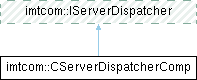
CServerDispatcherComp is the primary implementation of IServerDispatcher, providing lifecycle management for HTTP and WebSocket server instances. It acts as a facade for controlling multiple server implementations from the imtrest module through a unified protocol-based API.
This component enables applications to start, stop, and monitor multiple communication protocols simultaneously on the same host, with independent control over each protocol.
Key Features
Protocol Support:
- PT_HTTP: HTTP/HTTPS server via imtrest::CTcpServerComp
- PT_WEBSOCKET: WebSocket/WSS server via imtrest::CWebSocketServerComp
- Extensible design for additional protocols (gRPC, UDP, etc.)
Server Lifecycle Management:
- Independent start/stop control per protocol
- Status monitoring with ServerStatus enum
- Graceful startup and shutdown
- Error handling and logging
ACF Component Integration:
- References to server components (HttpServer, WebSocketServer)
- Component-based dependency injection
- Factory-compatible configuration
Server Status Tracking:
- Delegates to underlying IServer implementations
- Real-time status queries
- States: SS_UNKNOWN, SS_STOPPED, SS_STARTING, SS_RUNNING, SS_STOPPING
Architecture
Component References
| Reference | Type | Description | Default |
|---|---|---|---|
| HttpServer | imtrest::IServer | HTTP/HTTPS server implementation | "HttpServer" |
| WebSocketServer | imtrest::IServer | WebSocket/WSS server implementation | "WebSocketServer" |
Both server components must be properly configured with IServerConnectionInterface references to provide host, port, and security settings.
Protocol-to-Server Mapping
The dispatcher routes protocol operations to specific server implementations:
| Protocol Type | Server Reference | Typical Implementation | Port (Default) |
|---|---|---|---|
| PT_HTTP | m_httpServerCompPtr | imtrest::CTcpServerComp | 9001 |
| PT_WEBSOCKET | m_wsServerCompPtr | imtrest::CWebSocketServerComp | 9000 |
| PT_GRPC | (not supported) | — | 50101 |
| PT_FILE | (not supported) | — | N/A |
Usage Examples
Basic Usage
Factory-Based Creation
Application Lifecycle Integration
Health Monitoring
Error Handling
The dispatcher handles several error scenarios:
Startup Failures:
- Port already in use → StartServer() returns false
- Invalid configuration → StartServer() returns false
- Missing server reference → StartServer() returns false
- Permission denied → StartServer() returns false (logged)
Status Queries:
- Invalid protocol → Returns SS_UNKNOWN
- Null server reference → Returns SS_UNKNOWN
Shutdown:
- StopServer() on already-stopped server → Returns true (no-op)
- StopServer() with null reference → Returns false
Best Practices
- Initialization Order: Configure all server components and their connection parameters before calling StartServer().
- Graceful Shutdown: Stop servers in reverse order of startup to ensure dependent connections are closed first (WebSocket before HTTP).
- Status Checking: Always check GetServerStatus() before attempting to stop a server to avoid unnecessary operations.
- Error Logging: Check StartServer() return value and log detailed errors for troubleshooting deployment issues.
- Health Monitoring: Implement periodic status checks to detect and recover from unexpected server failures.
- Reference Validation: Ensure HttpServer and WebSocketServer references are set before using the dispatcher.
- Wait for Startup: After StartServer(), wait for SS_RUNNING status before considering the server operational (servers may start asynchronously).
Current Limitations
- Only supports HTTP and WebSocket protocols
- gRPC and File protocols are not implemented
- No built-in health monitoring (implement externally)
- No automatic restart on failure
- No load balancing or server pooling
Integration Points
Server Implementations (imtrest):
- imtrest::CTcpServerComp: HTTP/HTTPS server
- imtrest::CWebSocketServerComp: WebSocket/WSS server
- Both implement imtrest::IServer interface
Configuration (imtcom):
- IServerConnectionInterface: Host, port, security configuration
- Typically CServerConnectionInterfaceParamComp
Applications:
- imtserverapp: Application server lifecycle
- imtservergql: GraphQL server management
- imtbase: System status reporting
- See also
- IServerDispatcher, IServerConnectionInterface
- imtrest::IServer, imtrest::CTcpServerComp, imtrest::CWebSocketServerComp
Definition at line 374 of file CServerDispatcherComp.h.